Monday, 1 December 2014

Camerawork in Pyscho Opening Sequence


  Camerwork in Psycho Opening Sequence


In the opening sequence to Pyscho, Alfred Hitchcock uses several different cinematographic techniques to form suspense and tension. The film opens with a pan shot of a large urban landscape, gradually beginning to zoom in toward a building in the distance, this then fades into a shot of the camera zooming in to a window, creating a very claustrophobic feeling due to the increasingly smaller amount of space within the sequence. This shot infers that we as an audience are zooming into a scene, not yet being able to see what is within the scene and creating a very uneasy tone for the audience, it is establishing the secretive nature of the scene, that we as an audience must enter through a window in order to see the events that will unfold.


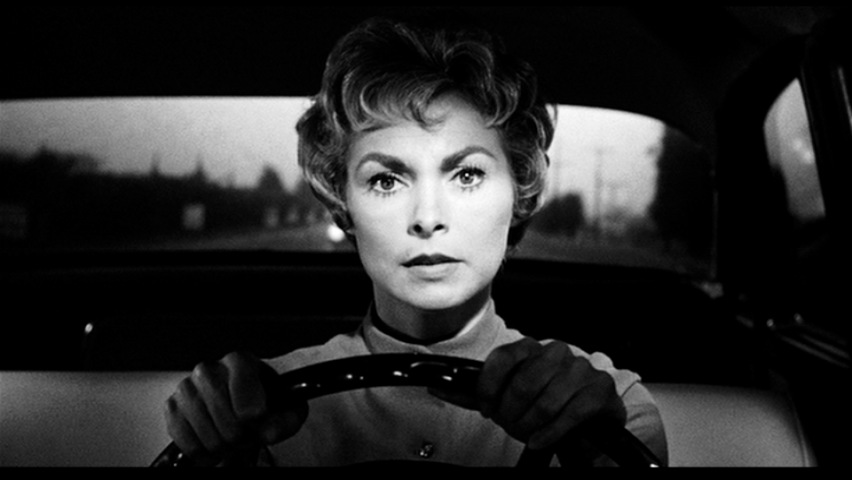
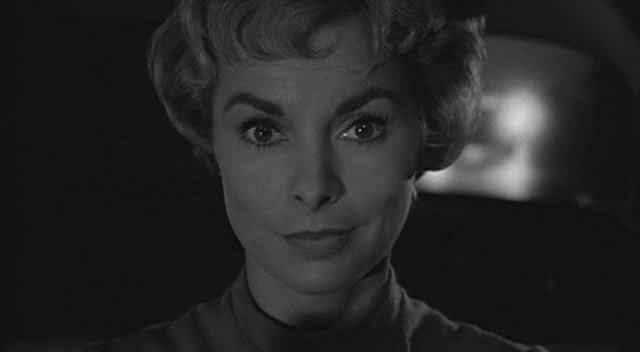
Then Hitchcock sets the scene and allows the camera and therefore the audience enter into the room, to see a mid-shot of the character Marian, lying promiscuously on a bed, a shirtless man standing over her, the audience quickly learning that she is having an affair with this man, immediately asserting to the audience that she is not to be trusted. This point is then furtherly reflected later on in the sequence when she is seen to be in a car, driving. The scene begins with a mid-shot, cutting to a point of view shot of the road ahead, every time it cuts back to Marian, closing in, this creating the idea of the audience closing in on the character and her thoughts, understanding her emotions more and more. It also creates a sense of unease, the audience now in anticipation for something to happen between these long cuts between POV and close up. The idea of claustrophobia is also shown here, as the space around the character becomes smaller and darker.

Hitchcock also uses pathetic fallacy to represent the emotions of the character, who, upon closing in upon her face, we can see she is distressed, the pathetic fallacy of the rain reflecting this. The lighting in this shot is very shadow orientated, the characters face brightly lit, to her left darkness, this perhaps referencing her darker side, showing that she is evil or manipulative, and the fact she is travelling under the cover of darkness only emphasizes this point. The camera angles remain at mostly mid shots throughout this sequence, suggesting that maybe Hitchcock wanted the audience to focus mainly on the character's face and interpret scenes and emotions that way, without having to delve into too much action or dialogue, something which may be interesting to explore in our Thriller opening. 

Mise en scene in film noir

Thursday, 20 November 2014

Women and Setting in Film Noir


Women and Setting in Film Noir


Women, or Femme Fatales in film noir exploit their bodies and sexual prowess to manipulate men into getting what they want, whether it be money or power. Despite the fact a Femme Fatale exploits her sexuality, she doesn’t conform to gender stereotypes of conventional roles of women of the time of the film, film noirs generally being set in the 1940’s, such as a house wife or mother, but this recklessness to normality leads to a self-destructive ending for the formally in control Femme Fatale and a dangerous and often fatal ending for any man who had followed in example. This wasn’t a very positive message for women, telling them that despite they may have aspirations to be strong, independent women, it would not end well if they simply dismissed the sexist stereotype that had been cast upon them.

Femme Fatales demonstrate the male dominated world that film noir displays, the fact she is seen as somewhat of a villianess because of her pervasive nature, and in ultimately dying at the end of the film, restores the social corruption that her life has caused. She is represented in a desirable way, low key lighting and shadows are used to show a aura of mystery and darkness to the character and highlighting the key features of the womans face, using flags to make certain parts of the face appear more prominant, such as eyes and mouth. Another lighting technique used to portray Femme Fatale's is butterfly lighting which makes the face appear more flawless and often creates a triangular shaped shadow under the nose and shadows around the cheekbones making them a lot more defined.


Heroes in Film Noir
 
 
Heroes in Film Noir are very different in contrast to Femme Fatales, especially in relation to gender as all heroes in Film Noirs are men. These men were tall, underestermated and smart, often seen smoking.  The men are often isolated idividuals or detectives, men who 'work alone' in large metropoliton spaces such as rough parts of town such as red light districts and offices , their worlds corrupted with crime and cruelty, this often domintaing their worlds making their lives very saddistic, which in a way is the entire representation of Film Noir.
 
The personalities of the heroes are very masculine and don't show much emotion, as this is considered a womanly trait, many aspects of their personality contrasts precisely with what is considered to be feminine, this to a modern audience appearing very sexist. Adding to this, male characters are often brought down by dull house wives or lead astray by manipulative Femme Fatales, women being seen as being in the way of their lives and aspirations.
 
Their plots often evolve around a corrupted world, reflecting the depressing themes within Film Noir the characters often end up dying at the end of the film to reflect the off balance and un-just feel to the world, that even the strong hero dies. This is also reflected in lighting, harsh low key lighting to create deep shots, visually claustraphobic to look at and canted angles to show mistrust. German expressionism lighting also used to create an unsettling feeling and show that the world around you can be darker than it seems. Venetian blinds are vastly popular to to cast harsh rays of light upon heroes faces to show the contrast between the dark and the light of their world and to portray the idea of them having to hide and Chiaroscuro lighting techniques were used to form large, dark, shadows that showed the split personality of the character and the depth to the piece.


Thursday, 13 November 2014

The Purpose of a Film's Opening Sequence

THE PURPOSE OF A FILM’S OPENING SEQUENCE

https://www.youtube.com/watch?v=-VXkUzf1et4

The opening of a film is vastly important to the audience’s enjoyment and involvement of the plot and series of characters they are about to be confronted with, it sets the tone of a movie, the time and the place, and begins to unravel the key themes. Not attracting the audience’s attention within the first few minutes could lead to an overall disliking for the piece so the opening sequence is very key to a film’s success.


The first two minutes to the film Inception, a science fiction thriller really demonstrates how to draw in the viewers by making them want the answer to a lot of questions very quickly. It opens with a close up and slightly canted shot of the ocean, wave’s choppy and harsh, diegetic sound of the water immediately created a feeling of unease and confusion. The close up shot not allowing for much to be seen other than the water, breaking generic film editing rules by not opening with an establishing shot but with said close up. The slow speed of the waves also forming a some-what dreary like state, this then being reinforced with the following close up canted angle of Leonardo Di Caprio waking up on the shore of a beach, the canted angle showing the characters confusion and also electing this same feeling from the audience and various questions such as, why is he here? How did he get here? Who is he? Where is he?


A shot is then shown of children playing on the beach, their clothes bright and yet a slightly dazed filter has been put over the top to represent that it is a dreamlike state he is in, they are not actually there. The cut between shots quick as if the character had just woken up and was blinking themselves awake, this then switches to a shot of the back of the character, a POV shot of a guard, of which we can tell he is due to Mise En Scene and his costume of an official looking uniform, poking his back with a large gun, then lifting up his soaked through jacket to reveal a hand held gun tucked into the back of his trousers. This then causes a series of other questions, why are there guards? Why does he have a gun? Why is he concealing it in a suspicious way? By this point the audience is enthralled and waiting for some questions to be answered, and their wish is then granted with a cut across to the first establishing shot, or wide shot, of the beach and a tall Chinese looking building with further guards guarding this building. This answers the audience’s question of setting is relatively well but the confusion is still present as the guards communicate in a language unknown to the viewer. The danger represented in the mise en scene, such as the gun adds to the mystery of the scene.

The following scene then contrasts with high key lighting in the previous clip, the diegetic light coming from the sun, now, in this new scene, low key lighting is shown, with dark shadows cast from the diegetic lighting used in the second indoor scene, the ceiling lights being the only light source in the room casting a lot of shadows and giving the room an almost golden glow giving the impression of richness and wealth. This darkness intensifies the atmosphere and starts to form the idea of genre in the watcher’s mind. This scene also begins to explore the idea of character, and seemingly introduces what the audience will presume to be the protagonist and the antagonist. The antagonist is shown to be wearing all black and the camera slowly zooms in toward his back profile, so we cannot see his face, only hear his voice, again, speaking in another language, subtitles now being used to show what is being said.

The positioning of the antagonist, sat across the table from Leonardo’s character asserting their opposition from one another. The first mid shot we see of the antagonist is an over the shoulder shot from the protagonist’s point of view and the use of shot reverse shot only showing their hands to begin with creates a sense of unease and perhaps anticipation for action. This establishment of the secretive nature of the scene and the obvious distrust between the characters starts to set up the plot of the story, revealing that the theme is going to be something relevant to this idea of mistrust and secrets. The antagonist here picking up a strange and small spinning top, which he begins to set spinning on the table, causing diegetic sound of the metal hitting the glass of the table and the twisting noise it made, referencing to the idea of science-fiction thriller genre because of this bizarre object which will later be a key theme within the film. This then leads onto a sound bridge; the characters finally look at one another face to face when speech begins in a flash back showing a more youthful looking antagonist, and a slightly more dapper version of the protagonist, in the exact same room, closer to one another and happily chatting. This really capturing the viewers’ attention in for the long haul, developing questions about the back stories of both these men.

           
So in conclusion, the opening sequence of Inception targets the most important aspects of a film opening, drawing in the audience’s attention, beginning to display the themes and the genre of the film, introducing the characters, the protagonist and antagonist and creating a certain atmosphere for the movie. Overall I think the opening to Inception is very effective and makes for a very enjoyable beginning sequence. 

Sub Genres of Thrillers

Powered by emaze

Wednesday, 12 November 2014

What can I learn from my Preliminary Task?

What can I learn from my preliminary task?

 Whilst filming our preliminary task I took a lot of different aspects into consideration, such as editing, camera angles, plot. How efficiently such things worked would influence how I execute certain things when I come to film and make our thriller opening and since doing this task I have definitely learnt a lot.


      The film in which I and my group produced we entitled Salem, as we had aimed to make it slightly more interesting and have both characters as witches, attempting to create a more intense tone with the use of low key lighting and diegetic lighting such as candles, in truth this made the scene a little too dark and we should have sought to find better lighting prior to filming. We should have also included more eye level shots of the characters to assert their intimidating nature but we did include quite a few canted angles to create unease forming a somewhat negative atmosphere and the feeling of distrust.
    My personal favourite and strong shot was a close up of the character Fiona slowly twisting open a door handle with her magic, this immediately establishing the imaginative feeling of the piece, making it more relatable perhaps to a specific audience of those who like things supernatural, generally in our opinion this being teenagers, and the fact both characters are female attracting a mostly female audience. Another shot I would have really liked was a close of the character Fiona which would have been placed as the final shot and would have faded to black, and the reason I have used the word would so often is because in fact the shot was never actually captured due to some technical problems involving not actually hitting record. So that is another aspect I will especially take into consideration whilst recording my thriller opening.
Technical wise, the preliminary task did not go well, initially our memory stick did not have our data on it and luckily we were able to recover it but the process became very annoying and stressful and we are very glad we backed up the footage. The establishing shot was one of the clips we lost during the problems with the sim card, but we recovered this quickly by re-filming it in lesson and I really believe it became a better establishing shot than we had initially recorded. The lighting was non diegetic and we made use of shadows to show the dark side to this character before the film had even begun. I think this could have been made even better if we had added music to the piece. Although this shot was not planned exactly as it was executed it turned out to be rather dramatic and I think proves how you can stray from the planning stages if it means you get more of a diversity of clips, our planning being very brief and not very many shots included, this is something I intend to be more thorough with for the Thriller opening.
The planning, although good and very self-explanatory could have been more descriptive and more time should have been dedicated to planning the mise en scene. Generally our planning led to fairly good continuity, I say fairly good because of the technical issues we had with recording, sometimes loosing large parts of footage so we had little to no over the shoulder shots of Fiona (hair tied back) whereas we had an awful lot of over the shoulder shots for the character Gwendolyn (hair down) which made the shot reverse shots rather jumpy in parts and again I regret not filming any eye level shots to demonstrate the intimidating nature of the scene. It had been planned we got the same number for each character so this is something I hope we don’t lose for our Thriller. To improve the overall quality of this task I would have definitely improved the light quality so you could see more facial features and emphasize the actors a little more, scripturally the actors, one being me, performed it relatively well but I believe more on camera experience is required before coming to film the Thriller as many of the scenes and delivery of lines made me cringe, mostly because it was me speaking, but also because it wasn’t particularly good, and the acting somewhat wooden, however saying this I would not hesitate to use myself as an actor again purely for the reason it is both experience for my drama a-level and also because I understood what I needed to portray plot wise. 

Whilst filming not only have I learnt a lot about the technological side of creating a film, but I have learnt about the editing side also and the way in which to cut clips to make them flow easily, the 180 degree rule really benefitting me here, with the camera always remaining on one side of the 180 degree line and the actors on the other. I had never used this editing software before but I found it to be relatively easy and ended up doing rather a lot of the editing myself due to my understanding of the program. I think I would like to improve when it comes to transitions and would like to experiment with cross cutting between one scene and another. Ultimately there is a lot that could have been improved upon and I am determined to make the Thriller opening vastly smoother and better lit than our preliminary task, although I am glad we had the opportunity to make this and see where faults would be made.
Monday, 3 November 2014

Preliminary Task

Here we can see our initial concepts for filming our Preliminary task, our plan for the order of shots we would take, although this changing when we actually came to filming as we decided on several more canted and lower angles. A floor plan is also included in this for when we had chosen to film inside Abbie's home with a night time setting, a mind map of the actors, props and plot we could have possibly included. And finally the script we wrote and used for the piece with the two characters conversing.


And here is the finished project: